

If your cat suddenly appears beside you whenever you open a box of Cheez-Its, you may wonder whether sharing one little cracker is harmless. After all, Cheez-Its are small, crunchy, and smell cheesy enough to attract a curious cat. But can cats eat Cheez-Its safely, or should this human snack stay on your plate?
The short answer is that Cheez-Its are not a recommended treat for cats. PetMD specifically lists Cheez-Its and similar cheese crackers among foods cats should avoid because they can provide unnecessary calories, fat, carbohydrates, and other ingredients without offering the nutrition cats need.
That does not necessarily mean one accidentally stolen crumb will cause a serious problem in an otherwise healthy cat. The bigger concern is making salty, processed crackers a habit. Cats have nutritional needs that are very different from ours, and most of their calories should come from complete and balanced cat food.
In this guide, you’ll learn what happens if a cat eats Cheez-Its, why they are not ideal, what ingredients matter, when to contact a veterinarian, and which simple treats are better choices.
🧀 Can Cats Eat Cheez-Its Safely?
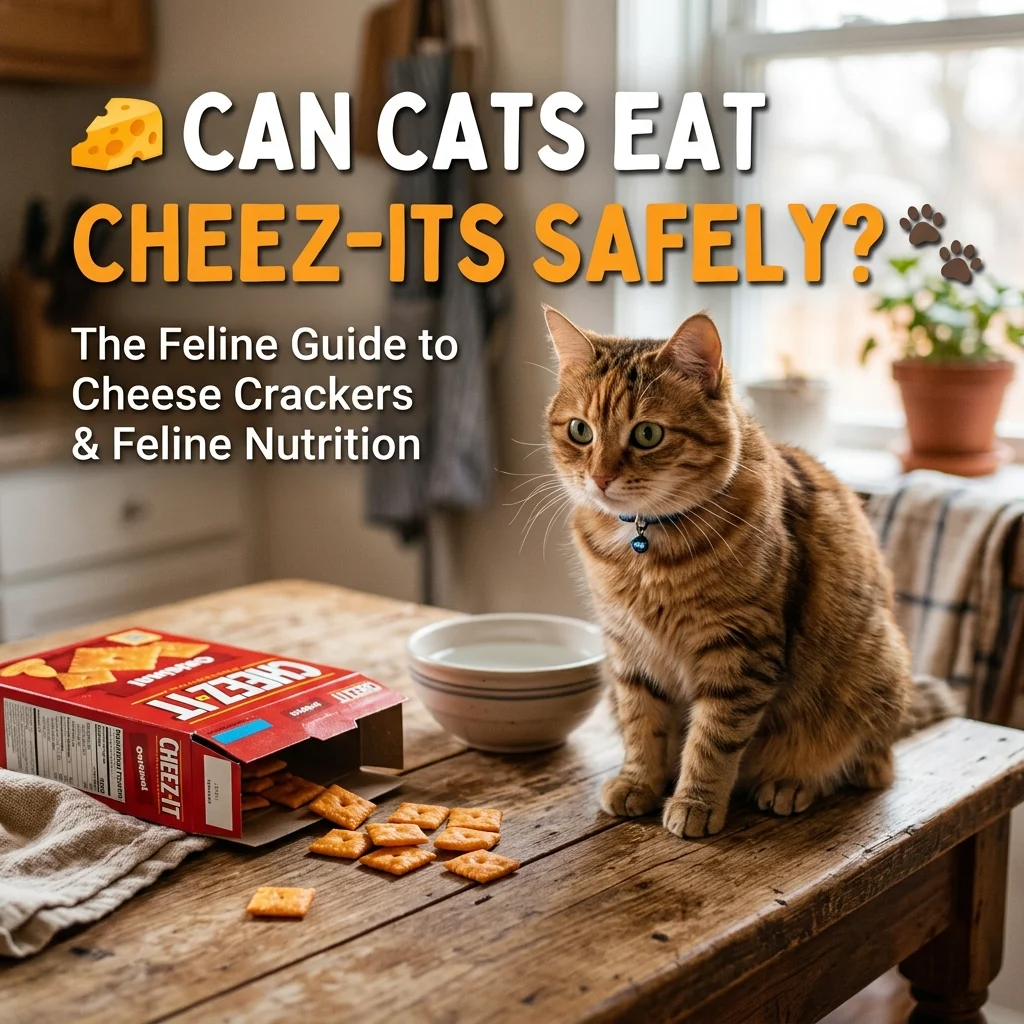
Cheez-Its are not considered a suitable regular treat for cats. While a tiny accidental bite may not cause a serious problem in a healthy cat, there are several reasons to keep these crackers off the feline menu.
- 🐱 Cheez-Its are made for humans, not formulated as feline treats.
- 🧀 Their cheese flavor does not make them nutritionally useful for cats.
- 🧂 Processed crackers can contribute unnecessary dietary sodium.
- 🍞 The crackers contain carbohydrates that cats do not need as treats.
- 🧈 Their fat and calorie content can add unnecessary calories.
- 🥨 Crunchy texture does not provide a nutritional benefit for cats.
- 😺 One tiny accidental piece is generally less concerning than repeated feeding.
- 🚫 Regularly sharing crackers can encourage unhealthy snacking habits.
- 🍽️ Human snacks should never replace your cat’s complete balanced food.
- ⚖️ Extra snack calories can contribute to unwanted weight gain.
- 🩺 Cats with medical conditions may need stricter dietary control.
- 🐾 Kittens have especially important nutritional needs while growing.
- 💧 Salty foods may make cats drink or urinate more.
- 🧪 Processed foods contain combinations of ingredients cats do not need.
- ❤️ A healthier treat can provide enjoyment without unnecessary ingredients.
🧂 Why Are Cheez-Its Not a Good Cat Treat?
The problem is not simply the word “cheese” on the package. Cheez-Its are a processed snack containing several ingredients that make them very different from a simple, species-appropriate cat treat. PetMD notes that cheese crackers are high in calories, fats, and carbohydrates while offering little useful nutrition for cats.
- 🧂 Salt makes savory crackers less appropriate for frequent pet snacking.
- 🧀 Cheese flavor does not mean the snack meets feline nutritional needs.
- 🌾 Crackers provide carbohydrates instead of the animal nutrients cats require.
- 🧈 Added fats can increase the calorie load of tiny snacks.
- 🍪 Processed crackers offer little nutritional value compared with cat treats.
- 🐱 Cats need nutrients that human snack foods may not provide.
- 🍽️ Too many snacks can reduce interest in regular balanced meals.
- ⚖️ Repeated calorie-heavy treats may contribute to weight gain.
- 🧪 Seasonings can vary between different cracker products and flavors.
- 🚫 Human snack foods are not designed around feline dietary requirements.
- 🐾 Cats are obligate carnivores with specialized nutritional needs.
- 💪 Animal-based nutrients are particularly important in a cat’s diet.
- 🥩 Meat-based treats usually make more nutritional sense for cats.
- 🛑 A crunchy texture alone does not make a snack healthy.
- ❤️ Choosing cat-specific treats makes portion control easier.
🐱 What Happens If a Cat Eats One Cheez-It?
If your cat grabbed one Cheez-It while you were not looking, there is usually no reason to panic. The response can depend on the amount eaten, the individual cat, and the ingredients in the particular product. PetMD says a healthy cat that eats a small amount of cheese may simply be monitored, although gastrointestinal upset can occur.
- 😺 One small cracker is very different from eating an entire box.
- 👀 Watch your cat normally after an accidental small bite.
- 💧 Make sure fresh drinking water is readily available.
- 🍽️ Continue offering the cat’s normal balanced food.
- 🤢 Mild stomach upset can sometimes occur after unfamiliar foods.
- 💩 Loose stool may indicate that the snack did not agree.
- 🤮 Vomiting is a reason to pay closer attention.
- 😴 Unusual lethargy should not be ignored.
- 🚫 Do not give additional crackers to “see what happens.”
- 📦 Check the package if your cat ate several crackers.
- 🩺 Contact your veterinarian if concerning symptoms develop.
- 🐾 Cats with existing illnesses may need individual advice.
- ⚠️ A large quantity deserves more attention than one crumb.
- 📞 Ask your veterinarian about significant or unusual ingestion.
- ❤️ Keep human snacks stored somewhere your cat cannot reach.
🧀 Is the Cheese in Cheez-Its Bad for Cats?
Cheese itself is not automatically poisonous to cats, but that does not make cheese crackers a good snack. Some cats can tolerate small amounts of certain cheeses, while others may develop digestive upset. Cheez-Its add crackers, seasonings, salt, fat, and other ingredients to the picture.
- 🧀 Cheese is different from a complete and balanced cat food.
- 😺 Some cats tolerate tiny amounts of plain cheese.
- 🤢 Other cats may experience digestive discomfort after dairy foods.
- 🥛 Many cats have limited ability to handle dairy comfortably.
- 🧂 Cheez-Its contain more than just cheese.
- 🍞 The cracker portion adds carbohydrates to the snack.
- 🧈 Added fat increases the total calorie contribution.
- 🧪 Flavoring ingredients make the product more complicated.
- 🚫 Cheese crackers should not become a routine cat treat.
- 🐱 Cats do not need cheese to meet their nutritional requirements.
- 🥩 Meat-based treats generally fit feline nutrition better.
- 🍗 Plain cooked chicken can be a simpler alternative.
- 🥚 Small amounts of plain cooked egg may also be suitable.
- 💧 Fresh water should always remain available.
- ❤️ Treat choices should support, not replace, balanced nutrition.
🧂 Are Cheez-Its Too Salty for Cats?
Salty snack foods are generally not a good choice for cats. Veterinary guidance specifically recommends avoiding salty snack foods, and excessive salt intake can cause increased thirst and urination and, at higher exposures, more serious problems.
- 🧂 Cats do not need salty crackers as part of their diet.
- 💧 Excessive salt can increase thirst.
- 🚽 Increased urination can occur after excessive salt intake.
- 🐱 A cat’s normal diet already provides needed nutrients.
- 🥨 Salty snack foods are unnecessary extras.
- ⚠️ Larger amounts are more concerning than tiny accidental tastes.
- 🤮 Salt exposure can cause vomiting in excessive amounts.
- 💩 Diarrhea can occur with significant dietary upset.
- 😴 Depression or unusual weakness can be concerning signs.
- 🐾 Tremors or seizures require urgent veterinary attention.
- 📦 Keep salty snacks sealed and away from curious pets.
- 👀 Do not assume a cat will stop after one cracker.
- 🍽️ Use cat-specific treats when rewarding your pet.
- 💧 Always provide clean drinking water.
- 🩺 Contact a veterinarian if you suspect significant salt ingestion.
🍞 Do Cats Need the Carbohydrates in Cheez-Its?
Cats can process some carbohydrates, but that does not mean crackers are a necessary part of their diet. Cats are obligate carnivores and have specialized nutritional requirements, including nutrients obtained from animal tissues.
- 🐱 Cats have nutritional requirements different from humans.
- 🥩 Animal-based nutrients are particularly important in feline diets.
- 🍞 Crackers are not necessary to provide essential feline nutrition.
- 🍪 Human biscuits should not replace nutritionally complete cat food.
- 💪 Cats need appropriate protein for maintaining their bodies.
- 🧬 Taurine is one important nutrient cats specifically require.
- 👀 Vitamin A requirements also differ from those of humans.
- 🐾 Their evolutionary diet helps explain their specialized needs.
- 🍽️ Complete cat food is designed around those nutritional requirements.
- ⚖️ Extra carbohydrate calories can add up over time.
- 🥨 Crunchy human snacks are optional, not necessary.
- 🚫 A cat does not need crackers for energy.
- ❤️ Treats should complement a balanced diet.
- 🐟 Species-appropriate treats can provide more useful nutrition.
- 🩺 Ask your veterinarian about treats for special diets.
⚠️ Can Cheez-Its Make Cats Sick?
Cheez-Its are not generally considered a suitable cat food, and eating them can potentially cause digestive upset, especially if a cat eats several or is sensitive to certain ingredients. The risk is different for every cat, so symptoms matter more than guessing from the food alone.
- 🤢 Stomach upset can happen after unfamiliar human foods.
- 🤮 Vomiting is a symptom worth monitoring after unusual eating.
- 💩 Diarrhea may occur when a cat’s diet suddenly changes.
- 😿 Loss of appetite can signal that your cat feels unwell.
- 😴 Unusual tiredness deserves closer attention.
- 💧 Encourage normal water access without forcing your cat to drink.
- 🐾 Observe behavior rather than assuming everything is fine.
- 📦 Keep the product package available if veterinary advice is needed.
- 🩺 Contact your veterinarian when symptoms persist or worsen.
- 🚨 Severe symptoms require prompt professional attention.
- 🐱 Young kittens may need more cautious dietary management.
- ❤️ Cats with chronic conditions may have additional restrictions.
- 🍽️ Avoid giving more human snacks while symptoms are present.
- ⏰ Monitor your cat rather than ignoring noticeable changes.
- 📞 Veterinary advice is appropriate when you are uncertain.
🐾 What If My Cat Ate Several Cheez-Its?
Eating several crackers is more concerning than stealing a single crumb. The exact risk depends on the amount consumed, your cat’s size and health, and the product’s ingredients. If your cat ate a large quantity or develops symptoms, contacting a veterinarian is the safest approach.
- 📦 Estimate how many crackers your cat may have eaten.
- 🧂 Check the nutrition and ingredient information on the package.
- 🐱 Consider your cat’s approximate size and age.
- 🩺 Remember whether your cat has any existing health problems.
- 💧 Keep fresh water available.
- 👀 Watch closely for unusual behavior.
- 🤮 Look for vomiting or repeated digestive upset.
- 💩 Check for diarrhea or unusual stool.
- 😴 Notice whether your cat becomes unusually sleepy.
- 🚫 Do not intentionally feed additional crackers.
- 🍽️ Return to your cat’s normal balanced food.
- 📞 Call your veterinarian if a substantial amount was consumed.
- 🚨 Seek urgent advice for severe or neurological symptoms.
- 📝 Keep the packaging available for ingredient information.
- ❤️ Early professional guidance is better than guessing.
🐱 Can Kittens Eat Cheez-Its?
Kittens should not be given Cheez-Its as a routine snack. Growing kittens need carefully balanced nutrition to support development, and human crackers do not provide what a kitten’s developing body needs.
- 🐾 Kittens have important nutritional needs during rapid growth.
- 🥩 Protein is especially important for developing muscles and tissues.
- 🧬 Growing cats require appropriate vitamins and minerals.
- 🍽️ Complete kitten food is designed for their life stage.
- 🧀 Cheez-Its do not provide balanced kitten nutrition.
- 🧂 Salty snacks add unnecessary ingredients to a kitten’s diet.
- 🍞 Crackers should not replace kitten food.
- ⚖️ Extra calories can interfere with appropriate feeding.
- 😺 Tiny kittens can be more vulnerable to dietary mistakes.
- 🍼 Very young kittens require specially appropriate feeding.
- 🩺 Ask your veterinarian before introducing unusual foods.
- 🥩 Cat-specific kitten treats are a better option.
- 💧 Fresh water should remain available when appropriate for age.
- 🚫 Avoid making human snacks part of a kitten’s routine.
- ❤️ A balanced diet gives kittens the foundation they need.
🍗 What Are Better Treats Than Cheez-Its?
If your cat loves getting a little snack from your hand, you have plenty of better choices. Veterinary guidance notes that small amounts of certain plain foods can work as treats, while commercially prepared cat treats can make portion control easier.
- 🍗 Small pieces of plain cooked chicken can be a tasty option.
- 🦃 Plain cooked turkey can work as an occasional treat.
- 🥚 Small amounts of plain cooked egg may be suitable.
- 🐟 Plain cooked fish can provide an appealing protein-rich snack.
- 🥫 Tuna packed in water can be offered in small amounts.
- 🥒 Some cats enjoy plain zucchini as a low-calorie snack.
- 🫛 Plain green beans can work for cats that enjoy vegetables.
- 🍉 Small pieces of seedless watermelon may suit some cats.
- 🫐 A few blueberries can be an occasional option for interested cats.
- 🍎 Tiny pieces of plain apple can work for some cats.
- 🥕 Plain cooked carrots can provide another occasional choice.
- 🍿 Unsalted air-popped popcorn may be suitable for some cats.
- 🐱 Commercial cat treats are specifically designed for feline use.
- 🍽️ Your cat’s regular kibble can sometimes work as a reward.
- ❤️ Choose treats that fit your cat’s overall diet.
🍖 What Human Foods Can Cats Eat as Treats?
Some human foods can be used occasionally as cat treats, but preparation matters. Plain, unseasoned foods are generally preferable, while salty, heavily seasoned, fatty, or potentially toxic foods should be avoided. Veterinary guidance specifically lists several plain foods that can be used as treats.
- 🍗 Plain cooked chicken can provide a simple protein-rich reward.
- 🦃 Unseasoned turkey can be offered in small portions.
- 🥚 Plain cooked egg may be acceptable for some cats.
- 🐟 Plain cooked seafood can provide an appealing treat.
- 🥒 Plain zucchini is a possible low-calorie option.
- 🫛 Plain green beans may suit cats who enjoy vegetables.
- 🍎 Small pieces of apple can work for some cats.
- 🫐 A few berries can occasionally be offered.
- 🍉 Seedless watermelon can be an occasional small treat.
- 🥕 Plain carrots may provide crunchy variety.
- 🍿 Unsalted air-popped popcorn can be used sparingly.
- 🍌 Small banana pieces may be tolerated by some cats.
- 🥩 Lean cooked meat is usually more species-appropriate.
- 🚫 Seasonings should be avoided when preparing human-food treats.
- 🩺 Ask your veterinarian about foods if your cat has special dietary needs.
🥩 Why Are Meat-Based Treats Better for Cats?
Cats are obligate carnivores, meaning their bodies have specialized nutritional requirements associated with animal-based foods. That does not mean every piece of meat is automatically a perfect treat, but it helps explain why plain meat-based rewards can make more sense than processed crackers.
- 🐱 Cats evolved with specialized nutritional requirements.
- 🥩 Animal tissues provide nutrients cats specifically depend upon.
- 💪 Protein supports normal muscle maintenance and body function.
- 🧬 Cats require specific amino acids such as taurine.
- 👀 Cats have unique vitamin A requirements.
- 🐟 Plain fish can be appealing to many cats.
- 🍗 Chicken can provide a simple high-protein reward.
- 🦃 Turkey offers another lean meat option.
- 🥚 Cooked egg can provide additional protein.
- 🧂 Plain preparation avoids unnecessary salty seasoning.
- 🌶️ Seasoned meats may contain ingredients unsuitable for cats.
- 🧈 Fatty meats can add excessive calories.
- 🍽️ Treat portions should remain small.
- ⚖️ Treat calories still count toward the daily total.
- ❤️ Species-appropriate treats make more sense than processed crackers.
⚖️ How Many Treats Should a Cat Have?
Even a suitable treat can become unhealthy when a cat receives too many. VCA guidance recommends keeping treats to no more than about 10% of a cat’s daily calorie intake, with the remaining calories coming from complete and balanced food.
- ⚖️ Keep treats within roughly 10% of daily calorie intake.
- 🍽️ Most calories should come from complete balanced cat food.
- 🐱 Smaller cats may need surprisingly few treat calories.
- 🧮 Check package calorie information when available.
- 🥩 Choose low-calorie treats when possible.
- 🍗 Break larger treats into smaller pieces.
- 🐾 Small rewards can still make training effective.
- 🚫 Avoid giving treats every time your cat begs.
- ❤️ Use attention or play as non-food rewards too.
- 🎾 Toys can provide enrichment without additional calories.
- 🧩 Food puzzles can turn small treats into activities.
- 🐱 Regular kibble can sometimes be used as a reward.
- 📦 Measure treats instead of feeding directly from the bag.
- 🩺 Ask your veterinarian about an appropriate calorie target.
- 🌟 A small treat is often enough to make your cat happy.
🚫 What Human Snacks Should Cats Avoid?
Cheez-Its are not the only human snack that should stay away from your cat. Some foods can be unsafe because of their ingredients, while others are simply poor nutritional choices. ASPCA guidance warns against several foods and notes that excessive salt can cause serious problems.
- 🍫 Chocolate should not be given to cats.
- 🧅 Onions can be harmful and should be avoided.
- 🧄 Garlic should not be used in cat treats.
- 🍇 Grapes should not be offered to cats.
- 🍇 Raisins should also be kept away from pets.
- 🍷 Alcohol should never be offered to cats.
- 🧂 Excessively salty foods are poor choices for feline snacks.
- 🍬 Foods containing xylitol should be kept away from pets.
- 🌶️ Spicy seasoned foods can upset a cat’s digestive system.
- 🥨 Salty snack foods provide little reason to share them.
- 🍟 Greasy foods can contribute unnecessary fat and calories.
- 🍪 Cookies often contain ingredients cats do not need.
- 🥜 Some nuts can cause digestive problems and other concerns.
- 🍰 Desserts usually provide unnecessary sugar and calories.
- 🩺 When uncertain, check with your veterinarian before sharing food.
🩺 When Should You Call a Veterinarian?
Most questions about one tiny accidental bite are different from situations involving large quantities or noticeable symptoms. If your cat has eaten a significant amount of an inappropriate food or appears unwell, professional veterinary advice is the safest option.
- 📞 Call your veterinarian after a significant amount is eaten.
- 🤮 Contact a vet if vomiting continues or seems severe.
- 💩 Seek advice for persistent or severe diarrhea.
- 😴 Report unusual lethargy or marked behavioral changes.
- 🍽️ Loss of appetite can deserve veterinary attention.
- 💧 Watch for unusual thirst or urination.
- 🐾 Neurological symptoms require prompt professional attention.
- 🚨 Tremors or seizures should be treated as emergencies.
- 🩺 Cats with medical conditions may need earlier advice.
- 🐱 Kittens deserve extra caution after unusual food exposure.
- 📦 Tell the veterinarian exactly what product was eaten.
- 🔢 Estimate the amount consumed if possible.
- ⏰ Note approximately when your cat ate it.
- 📝 Keep the package or ingredient list available.
- ❤️ When worried, professional guidance is safer than online guessing.
FAQ Section
Can cats eat Cheez-Its?
Cheez-Its are not recommended as a cat treat. They contain calories, fats, carbohydrates, salt, and other ingredients that do not provide the balanced nutrition cats need. PetMD specifically recommends keeping Cheez-Its and similar cheese crackers off the feline menu.
What if my cat ate one Cheez-It?
If a healthy cat accidentally eats one small Cheez-It, serious problems are not necessarily expected. Monitor your cat and avoid giving additional crackers. If vomiting, diarrhea, loss of appetite, unusual lethargy, or other concerning symptoms develop, contact your veterinarian.
Can kittens eat Cheez-Its?
Kittens should not be given Cheez-Its as a routine treat. They need nutritionally complete food designed for growth, and processed crackers do not provide the balanced nutrition required during development.
Are cheese crackers toxic to cats?
Cheese crackers are not best described as a routine cat food, but the concern is generally their ingredients, salt, calories, and poor nutritional fit rather than the word “cheese” itself. A large ingestion or concerning symptoms should be discussed with a veterinarian.
What are healthier treats for cats?
Small amounts of plain cooked chicken, turkey, egg, or certain other unseasoned foods may work as occasional treats. Commercial cat treats are another convenient option. Treats should remain a small part of the overall diet.
How many treats can cats have each day?
A common veterinary guideline is to keep treats at no more than about 10% of daily calories, with the remaining calories coming from complete and balanced food. The exact amount depends on your cat’s calorie needs, size, health, and diet.
Conclusion
So, can cats eat Cheez-Its? Technically, an accidental tiny bite is very different from regularly feeding them, but Cheez-Its are best left as a human snack rather than a cat treat. They offer little nutritional benefit for cats while adding unnecessary calories, carbohydrates, fat, salt, and processed ingredients.
Your cat has better options. Small pieces of plain cooked chicken, turkey, egg, or appropriate commercial cat treats can provide a more sensible reward. Just remember that even healthy treats should remain a small part of the daily diet, with complete and balanced cat food providing most calories.
If your cat sneaks a Cheez-It, stay calm, check how much was eaten, and monitor for unusual symptoms. For a large amount or concerning signs, contact your veterinarian. A crunchy snack may make your cat curious, but a species-appropriate treat is the smarter choice.
Share your favorite idea in the comments below!

Logan Chase is a creative writer at Pickupzonee, known for crafting witty pickup lines, clever jokes, and playful puns.He helps turn everyday conversations into fun, memorable moments with the perfect choice of words.